Summary
MBDA reviewers reject applications in under sixty seconds when ownership percentages don't align with federal minority business definitions. Documentation gaps around community benefit projections trigger instant disqualification regardless of revenue potential. Three precise certification requirements separate funded ventures from the rejection pile.
Key Takeaways
- •Your business must be at least 51% owned by minority people to get MBDA money
- •The average MBDA award will be around $15,000 in 2025, making competition tough
- •Your business plan must show clear community help and benefit to minority people
- •MBDA funding needs detailed money estimates and proof your business will work
- •Less than 3% of venture money goes to minority-owned businesses, making MBDA grants key
- •You need at least two years in business for most grants between $10,000-$25,000
What Is MBDA Business Plan Funding?
MBDA business plan funding comes from a specialized government agency. The Minority Business Development Agency started in 1969 to help minority-owned businesses grow. They give funding to businesses that meet their specific needs.
How Much Money Is Available?
The MBDA spent $122.1 million in fiscal year 2024. But their budget dropped greatly for 2025. The agency will operate with $75 million for FY 2025.
That means less money available in 2026. The average MBDA award will be around $15,000 in 2025. Your MBDA business plan needs to stand out from the crowd.
Who Can Apply?
Your business must be at least 51% owned by minority people to qualify. This is a hard need with no exceptions. You'll need legal documentation to prove ownership.
To qualify in 2025. Your business must show average annual receipts below $24 million over the past two years. Most small businesses easily meet this need.
MBDA Business Centers and Local Support
The MBDA Business Centers operate in major cities across America. The New York Business Center helps companies in Manhattan, Brooklyn, Queens, Bronx, and Staten Island. The Atlanta Business Center covers Georgia, Alabama, and South Carolina. The Phoenix Business Center serves Arizona, Nevada, Utah, and Colorado.
Each center has local staff who know their region's business setting. The Chicago Business Center director Maria Rodriguez helps companies connect with local suppliers and customers. The Los Angeles center focuses on tech and manufacturing businesses in California.
Your local MBDA Business Center gives free help writing business plans. They review drafts and suggest improvements before you apply. Some centers hold monthly workshops on grant writing and business planning. Why apply alone when expert help is free?
How Do You Write an MBDA Business Plan?
Your MBDA business plan requires special sections that regular business plans don't have. The agency wants to see community impact, not just profits. Here's what to include in every section.
Executive Summary Requirements
Begin with your community impact story. Explain how your business serves minority communities and be specific about jobs you'll create. What problems will you solve that others ignore?
Include your exact funding request amount and say precisely how you'll use the money. A business plan is the tool to convince people that working with you is a smart choice. Make your case clear from page one.
Market Analysis for Minority Businesses
Research will show what other businesses are doing and what their strengths are. But focus on how you serve minority customers differently than rivals.
Show market gaps that minority-owned businesses can fill. Use data about your local minority population and their specific needs. This proves there's real demand for what you're selling.
Financial Projections That Work
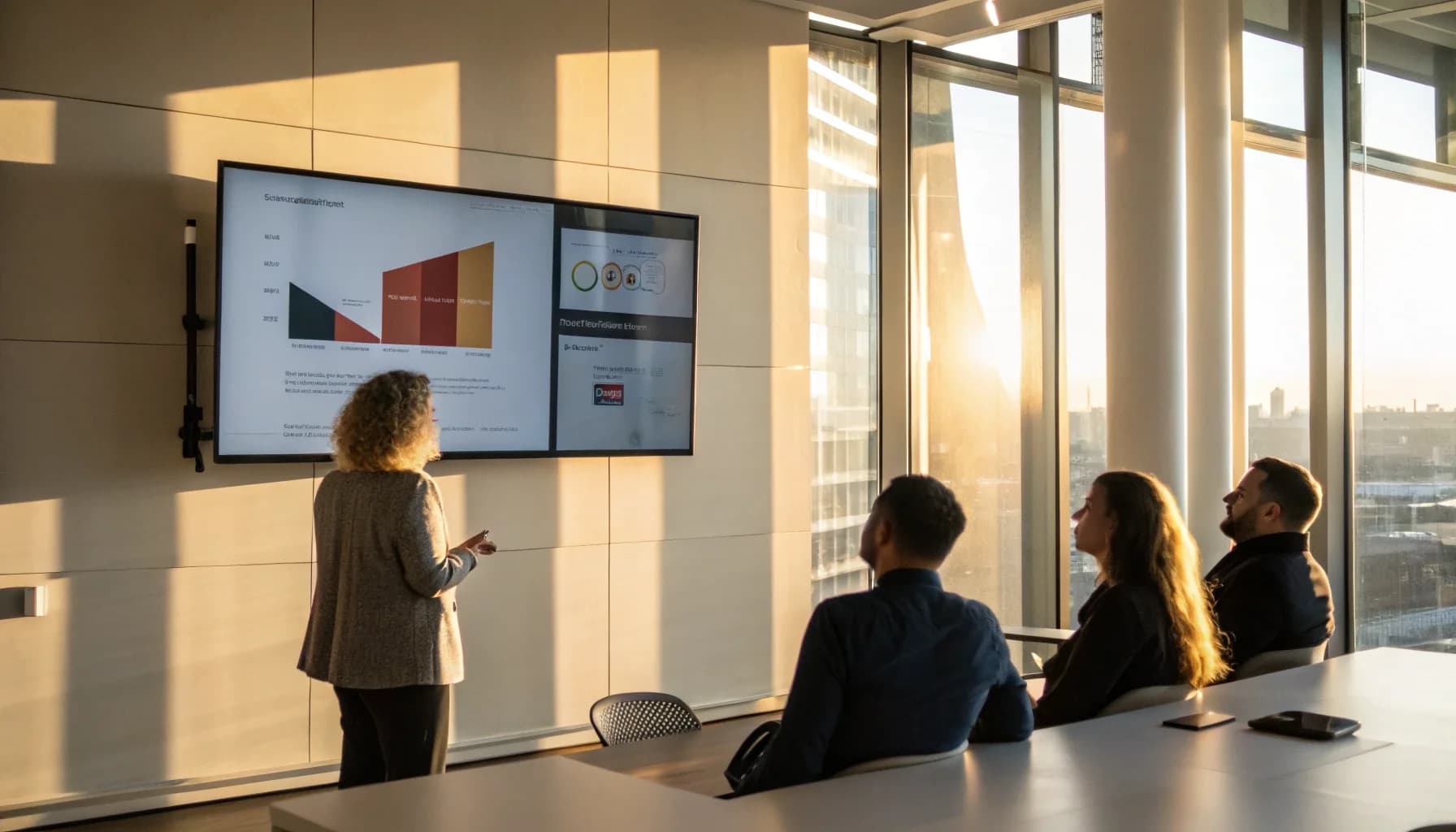
Use graphs and charts to tell your financial story clearly. MBDA reviewers want to see straightforward numbers, not confusing spreadsheets. How will you turn their investment into community benefit?
Include three-year estimates for income, expenses, and cash flow. Show exactly when you'll reach profit. Be realistic — overly optimistic estimates hurt your chances.
Management Team and Operations Details
Your management team section needs more detail than regular business plans. List each owner's percentage and background. Include resumes for key staff members, especially those with industry experience.
Highlight any team members who live in the communities you'll serve. The MBDA wants to see local people running local businesses. If your marketing manager grew up in the neighborhood, mention that. If your operations director speaks Spanish and your customers are Latino families, that matters.
Include an organizational chart showing who does what. Small businesses often have owners wearing multiple hats. That's fine, but be clear about responsibilities. Who handles money? Who manages employees? Who talks to customers?
What Are the Funding Requirements in a Business Plan?
MBDA funding needs go beyond basic business planning. You need to prove both business viability and community benefit. Here are the key needs every MBDA business plan must include.
Community Benefit Documentation
Explain exactly how your business benefits minority communities. Will you hire from local neighborhoods? Do you solve problems that large companies overlook? Be specific with numbers and examples.
Successful MBDA business plans often highlight job creation in underserved areas. Others focus on giving services that weren't available before. What's your unique community angle?
Business Experience Requirements
For smaller day-to-day grants ($10,000 to $25,000), you need two years in business. New businesses have fewer options but can still apply for startup programs.
Expansion grants for scaling might require annual income between $50,000 and $250,000. Know which programs match your business stage before applying.
Required Financial Documentation
You need certified financial statements for the past two years. This means statements prepared by a licensed accountant, not just QuickBooks reports. The National Association of Black Accountants has members who understand minority business needs. Charge reasonable rates.
Include bank statements showing steady cash flow. MBDA reviewers want to see you can manage money responsibly. If you had cash problems in the past. Explain what you learned and how you fixed them.
Your tax returns for the past three years are also required. Make sure they match your financial statements exactly. Any differences will raise red flags and slow down your application.
Why Do Minority Businesses Need Special Funding?
The funding gap for minority-owned businesses is real and growing worse. Understanding this gap helps you write a stronger MBDA business plan — one that addresses genuine problems.
The Venture Capital Problem
Less than 3% of total venture money will reach minority-owned businesses in 2025. This makes traditional funding extremely difficult to obtain.
Only 1.5% of total VC funding went to Black and Latino founders combined in 2024. These numbers show why MBDA programs are so crucial. What other options do minority business owners have?
Economic Impact of Minority Businesses
Hispanic-owned businesses add over $700 billion to the American economy annually. Minority-owned firms represented 28.8% of all U.S. businesses.
Your MBDA business plan should highlight how funding helps grow this impact. Show how your success creates more chances for other minority business owners in 2026.
Traditional Banking Barriers
Major banks like major commercial lenders. Bank of America approve loans for white business owners at rates 20% higher than minority owners. The central bank data Bank of Atlanta studied this gap. Found it exists even when credit scores are identical.
Community Development Financial Institutions try to fill this gap. groups like Grameen America and Kiva Microfunds focus on minority business owners. But their loan amounts are much smaller than traditional banks — usually under $50,000.
This is where MBDA grants become essential. Unlike loans, grants don't add monthly payments to your expenses. They give you working money without the debt burden that holds back so many minority-owned businesses.
Real-World Example
This example is for illustration purposes and is based on combined data patterns from multiple sources.
An business owner wanted to open a tech repair shop in an underserved neighborhood. Their MBDA business plan focused on three key points: community need, job creation, and financial sustainability.
They showed that residents traveled 45 minutes for basic phone repairs. The plan included hiring six local workers within two years. Financial estimates showed breaking even in month 18, with MBDA grant money covering first equipment costs.
The business owner also partnered with local schools to offer tech training programs. This community benefit angle made their application stand out, and they received a $12,000 MBDA grant. They opened successfully in 2025.
Note: This is a composite example created for illustration. Doesn't represent a single real person or company.
Note: This is a composite example created for illustrative purposes. Does not represent a single real person or company.
Types of MBDA Funding Programs Available
Different MBDA programs have different rules and award amounts. Knowing which programs fit your business stage helps you target the right chances. Avoid wasting time on applications you can't win.
MBDA Grant Programs and Business Centers
The MBDA Business Development Program gives grants to groups that help minority-owned businesses. These Business Centers then give free consulting services to business owners. The centers in major cities like Detroit, Miami, and Seattle each serve hundreds of businesses annually.
money Readiness Programs help businesses prepare for larger funding rounds. They teach business owners how to present to backers and lenders. The National Minority Supplier Development Council works with MBDA on these programs.
The Minority Business Enterprise Centers focus on government contracting chances. They help businesses get certified for set-aside programs. Connect with prime contractors looking for minority suppliers.
Specialized MBDA Programs
Export assistance programs help minority businesses sell products overseas. The MBDA Export Program connects businesses with international buyers and trade shows. They helped over 300 minority businesses enter foreign markets in 2024.
The Federal and State Technology Partnership Program focuses on tech companies. It helps minority business owners commercialize research. Compete for SBIR grants from agencies like NASA and the Department of Energy.
Rural programs serve minority businesses outside major cities. The Native American Business Development Institute gets special MBDA funding to help tribal enterprises. These programs often have less competition than urban grants.
Tools to Get Started With Your MBDA Business Plan
Getting your MBDA business plan right requires the right tools and way. Here's your step-by-step action plan for 2026 applications.
Step-by-Step Application Process
1. Gather ownership documents proving 51% minority ownership
2. Write your community impact statement first
3. Create realistic three-year financial estimates
4. Research local MBDA business centers for assistance
5. Submit your complete MBDA business plan package
A vague application is a rejected application. Be specific about everything — dollar amounts, timelines, and goals. Why leave anything to chance?
Common Mistakes to Avoid
Don't use generic business plan templates. MBDA reviewers want to see community focus throughout your plan, and standard templates get rejected quickly.
Avoid unrealistic financial estimates. If similar businesses in your area make $100,000 annually, don't project $500,000 in year one. Reviewers know what's realistic for different industries and locations. Why hurt your credibility with impossible numbers?
Free Resources and Mentoring
business mentorship programs mentors offer free business plan review services at chapters nationwide. The group has over 10,000 volunteer mentors, many with experience in minority business development. Contact your local business mentorship programs chapter before submitting your MBDA application.
The Women's Business Centers also help with business planning. These centers operate in most major cities. Even though they focus on women, many help any minority business owner with business plan writing.
Your local Small Business Development Center gives free consulting. SBDC advisors know MBDA needs and can review your draft plan. This network has locations at colleges and universities across the country.
FAQs
Pros and Cons of Writing a Business Plan
Pros
- ✓MBDA grants don't need repayment like loans do
- ✓Average awards of $15,000 can fund essential business equipment
- ✓MBDA also gives free business counseling and technical help
- ✓Programs exactly designed for minority-owned business problems
- ✓Can open doors to other government contracting chances
- ✓Builds credibility with other potential backers and lenders
Cons
- ✗Budget decreased from $122.1 million in 2024 to $75 million in 2025
- ✗Most programs need at least two years in business
- ✗Extensive documentation and community impact needs
- ✗High competition for limited funding slots
- ✗Income limits may exclude growing businesses
- ✗Application process can take several months to complete
Conclusion
Your MBDA business plan can change everything for your business. The agency spent $122.1 million helping minority-owned businesses in 2024. With the right plan, some of that funding could go to you. Focus on community impact and clear financial estimates. Show how your business helps people and creates profit. Don't forget to prove you meet the 51% minority ownership need. Writing an MBDA business plan takes work, but the rewards make it worthwhile. Start writing today and give your business the best chance at success.